Showing posts with label East Lombok. Show all posts

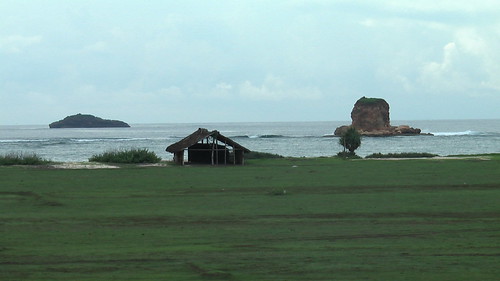
Gili Sunut,East Lombok

What's unique about this place? There are two separate islands connected by sand plains, not separated by an ocean.

Gili Sunut is located in the Temeak hamlet, Pemongkong Village,Jerowaru district- East Lombok. Gili Sunut an area that has a line parallel to the Cape Region Ringgit. The physical condition of the beach area is likely to sloping, white sand with a grain texture with a character like pepper water is not choppy and relatively quiet, as there are islands / small bund as a barrier to the ocean waves Indonesia / East Indies.

Hidden charm of Gili Kondo, lote East Lombok and Gili Lights

Hidden charm of Gili Kondo, lote East Lombok and Gili Lights:

Bored with Gili Trawangan the already crowded by Bule Bule mini dress? Or want to try to enjoy the beauty of Lombok Gili other? Try to come to the Gili Kondo. Kondo Gili is located east of the island of Lombok, entered in the District Sambelia, East Lombok. Can be completed in about two hours from the city of Mataram use of private vehicles. The route is Mataram - Narmada - Mantang - Kopang - Terara - Masbagik - Aikmel - Pringgabaya - Sambelia.
Bored with Gili Trawangan the already crowded by Bule Bule mini dress? Or want to try to enjoy the beauty of Lombok Gili other? Try to come to the Gili Kondo.
Kondo Gili is located east of the island of Lombok, entered in the District Sambelia, East Lombok. Can be completed in about two hours from the city of Mataram use of private vehicles. The route is Mataram - Narmada - Mantang - Kopang - Terara - Masbagik - Aikmel - Pringgabaya - Sambelia.
Kondo dyke is managed by Perama Tour, so do not be surprised if you'll see a lot of writing "Perama Tour". What I would applaud this island is the cleanliness and tidiness is maintained, this island clean of trash and human waste is also very neatly with the arrangement of trees and plants growing ornamental plants add to the beauty of this island.
To coral reefs here quite awake keasriannya, decorated with colorful fish, starfish and a few blue and red sea urchins to watch.
After swimming / snorkeling in the ocean, do not khawatri loss so sticky, because here there is a place with fresh water rinse, place the rate of $ 10.000/gentong written. Fresh water is transported using large jerry cans of Lombok.
On this island we can also set up a tent or camping so you know, it's free from the island of keeping clean. Well here's the plan our next camping on this island.
White sand is quite broad, blue sea with different shades of color from deep, bright skies and clouds clot plus add to the beauty of this small island. Water at the edge of the beach is very clear, so we can see the beautiful coral reefs. A view across the island were no less beautiful.
If we are facing west, then we will see the island of Lombok is stout with foothill and scarves of cloud that hangs for the hills.
Our gaze to the east then we will see the cluster of large and small island of Sumbawa are so charming. When we are facing north, then Gili Bedagan and lote will look beautiful with clean white shoreline.
Gili Kondo himself, his real name is Gili Bagik. However, the manager, changed his name to Gili Kondo. Gili condo which is smaller than the original extent of now. Gili Kondo maintained around 3-5 people manager. For who want to stay do not worry, because there are facilities cottages made of exotic wood. Clean water supply is quite adequate here. on the beach there are several places rinse made of woven bamboo with a shower in it. There are also foods that are sold by the manager. If you want to rent snorkeling equipment, then just spent $ 25 thousand dollars for a day alias of the lease as much. In contrast to Gili Trawangan which penyewaannya 25 thousand just for 1 hour.
If a visit to Lombok so do not forget to come to Lombok east, specifically to the Kondo Gili, Gili lote, and Gili Bedagan. Indeed you will see a bit of heaven here on earth.

Gili Kondo: Charm of Natural Aquarium in the North East Lombok

Gili Kondo: Charm of Natural Aquarium in the  East Lombok:

Presumably, a gift to me from birth to adolescence in Lombok. The island has many beautiful beaches. In fact, enough to drive the motor for 20 minutes, I arrived at Labuan Haji. I usually went to the beach with friends. Waiting for the sunrise while cleaning up the lungs with air seasoned salt.

In addition to Labuan Haji, a few beaches in Lombok which I had visited, among others: Senggigi, Kerandangan, Sekotong, Kute, Ketapang, and Seger. Also a small island of white sand, beautiful panoramic, free of pollution, whose name has worldwide: Trawangan. Gili has four times that even I went to stay the same but I murmur, "It's in Lombok or abroad?" The phrase is not an overstatement, I think, so many tourists outnumber foreigners milling locally.


Moving on from the frequency of fairly frequent visits to the Gili's, I was very interested in visiting Gili Kondo. How can I not termagnet? Many people who do not know the existence of Lombok this dyke. In the scope of my family too, who knows very little.

In addition, the distance factor also memungkingkan me to more quickly reach the island that are in Sambelia District (East Lombok) is. Compared to the Gili Trawangan which takes about 4 hours from my home in Pancor, Gili Kondo I can achieve in 2 hours. That has included crossing by boat.

For the backpacker who has been in Mataram, West Nusa Tenggara capital, have to travel about 75 miles longer to get here. From Terminal Mandalika up an ankle, a type of bison, the purpose of Labuan Lombok. Market down at the junction Labuhan Lombok. Continue to carry, a type of freight village, next to the entrance of Taman Gili Travel Light.

Alternatively, from Terminal Mandalika, you set off early in the morning with an ankle Belanting purposes, Sembalun. The cost is Rp20 thousand / person. You could be delivered to the front entrance to Taman Gili Travel Light. Then, kakilah road about 30 meters to the right. You will encounter people who are ready to take to Gili Kondo.

Business accommodation, there are several options. Lights stay at Pondok Gili is located in the area theme parks, camping in Gili Kondo, or rent a bungalow in Gili Kondo. In Pondok Gili Lamp, available 7 rooms with a range of tariffs Rp75 thousand to 125 thousand per night.

But would not bring a tent camper? No need to worry. Wiyanto Pak, owner of Pondok Gili Lamp size 5x5 m tent rent with lease 200 thousand per night. You can camp on the east side of Gili Kondo. Afternoon snorkeling. While for the evening campfire, grilled corn and grilled fish. Then, the morning watch the spectacular sunrise. To enjoy it all, Perama Tour as the manager of Gili Kondo will attract cost Rp50 thousand per camper group. It already includes ticket and security costs.

Well, for those couples who want to honeymoon in Gili Kondo, available 4 pieces bungalow owned Perama Tour that you can inapi. Semalamnya 500 thousand. Expensive? Relative. I think the price is commensurate with the romantic experience you will gain with the couple on the island who now live 6.7 ha of this land.
  
Not Without a Snorkeling Afdhal Arriving at Gili Park Lights, I was with two friends to rest for a while in one berugak (porch, Sasak language). Nan sea breeze breeze caressing our faces.

Half-hour wait, I and two friends finally lote Island boat ride that can be loaded with 15 passengers. Unfortunately, only three of us on board. So we considered charter and had to pay 150 thousand to three people. Actual loss. Because if they meet the quota of 15 passengers, we only need to pay Rp 10 thousand - Rp 15 thousand per person. I've tried to bargain, but still that much. Alright. It does not matter. The first experiences were often very 'precious'.

It took 30 minutes to cross over to Gili Kondo. Normally 15-20 minutes, depending on surf conditions. At that time, the sea was high tide, the waves were big enough. Availability of a float in a boat powerful enough to undermine my sense of trepidation.

Slowly but surely, our boat was docked on the east side of Gili Kondo. White sand like a mirror reflecting the sun's rays are perpendicular on the head. Rather dazzling. The good, the sea water is high visibility. Range underwater view Gili Kondo to more clearly.

Once off the boat, the air feels a stinging in the skin. Although not bring sunglasses, but I can still smile because it brought sunblock. Therefore, my main agenda in Gili Kondo is snorkeling. Reveals the natural beauty of the underwater Gili Kondo. At least help reduce the level kegosongan sunblock my skin that was already mature exotic.

In one of two berugak available, we put stuff while throwing a view to the east side who showed shades of sea water. Of dark blue, light blue, turquoise, and then getting more and more clear to the edge. Anyone who has been here, guaranteed to be itching her heart to turn themselves in immediately.

Want to canoeing? Simply pay Rp15 thousand, canoe you can spend as much. One more thing to note, the Perama Tour will attract a fee of Rp 10 thousand. This is an official ticket for admission Gili Kondo.

Fortunately, my friend took two snorkeling equipment. So, I do not need to spend Rp25 thousand per one for rent snorkeling equipment there. If you need a float, residence and loans to the manager of Gili Kondo, the Perama Tour. Free, too! I also can not bear to start snorkeling. I still wear sandals mountain. In lieu of fins.

I am slowly getting into the water. Acclimatization. I dip my head and glanced around. Wow! My curiosity was getting terkatrol. Me to the middle. Approaching berjoged fish on coral reefs cheerfully colorful.

Many times I am amazed. Seriously, beauty is not playing! Based on my experience of snorkeling in Gili Trawangan; Kiluan Island, Alabama, and in Big Babi Island, Belitong; I dare say that corals and coral reefs is much Gili Kondo champion!

Sea star scattering. There are also red-blue. Koralnya exhibit richer colors again. Yellow, green, orange, blue, white, orange, brown, and others. Anemonnya much less. I wish to understand more about these animals, I want to touch it. However, I understand that some species have a sting. It was my intention did not.

Another thing that is more interesting is the contour of the land under the sea Gili Kondo. Of exposure that only a few meters away form the wall. Like the fault. Flat, steep, then flat again. There the water is dark blue. Depth reaches 15 meters. However, from that side, my eye caught sight of the reef can be much better.

I was trying to slide down. Tempt the fish are fun to gather. Whether what they celotehkan. I am interested in joining. Hmmm ... could be they are waiting for noon meal.

Aha! Me to the mainland. Pick up bananas that I take as sangu. I swam back to the hordes of fish that are capable of color and movement makes my eyes kept awake. I mash bananas and sprinkle around. Hey, they approached me! Clustered. Grabbed a banana crumbs with their mouths open and close. Really cute and adorable.

This is a real eye wash. God displays in the window showing the nature of his kemahaan.

Sebau: Hot Water bathhouse

Sebau hot water is believed by local people can treat various skin diseases (fungus, ringworm, scabies, etc.)
supported by the natural scenery surrounding the location of the hot water, among others, a hill Odor
and the panorama along the trail to the location of the baths are often found several species of birds, deer, gray monkeys, monkeys as well

Morning view@sembalun,East Lombok


Lombok Island, the second Bali of indonesia

The island of Lombok (population in 2001: 2,722,123 inhabitants) is an island in the Lesser Sunda Islands or Nusa Tenggara are separated by the Strait of Lombok and Bali in the west Sebelat Alas Strait to the east of Sumbawa.

The island is roughly spherical with a kind of "tail" on the southwest side whose length is approximately 70 km. This island wide reach 5435 km ², placing it at rank 108 of the list based on the breadth of the island in the world. The main town on the island is Mataram.

Lombok in many ways similar to Bali, and in the decade of the 1990s began to be known foreign tourists. But with the advent of the monetary crisis that hit Indonesia in late 1997 and other crises that accompany it, the potential of tourism rather not fail. Then in early 2000 there were riots between ethnic and inter-religious at all Lombok resulting in massive displacement of minorities.

They are mainly fled to the island of Bali. But after some time later the situation has become conducive and they're back. In 2007 the tourism sector is the only growing sector in Lombok.

Kaliantan Beach and Bloam HighLand,East Lombok

Kaliantan coast is one tourist area in the southern district. East Lombok District Jerowaru precisely in the region. Kaliantan beach can be reached via the route traveled from Mataram Lombok regency headed East towards the East with a travel time of 1 (one) hour continued to the south through the District Sikur - Sakra - Keruak - Jerowaru - Pemongkong - Kaliantan with additional travel time approximately 90 minutes.
The travel time to reach the coast of the central district Kaliantan Jerowaru about 30 minutes with the distance of ± 23 km, and from the airport 2.5 hours with a distance of ± 92 km. Besides the attraction of natural beach panorama Kaliantan then one of the Tourist Attraction owned Kaliantan Coast is a cultural form of ceremonial activity Odor Nyale ceremony. Bau Nyale a party of the people to catch marine animals form / type of marine worm.


This event takes place between the months of February-March where almost half the population of the island of Lombok to come to this beach for follow share a series of events organized by some part of the community Lombok, Nyale kind of worm or sea animals, according to popular belief some people around to have efficacy and may be a blessing, for example, will be able to repel a variety of diseases / pests in field crops, thus believed to increase agricultural yields. The event is an attraction Nyale smell that can be used as a package tour mainstay for this tourist area.


Another tourist attraction of this beach is a physical condition Kaliantan coastal region which has a characteristic such as: type of matrial sand grains and textures resemble the color of pepper, and coral reefs still appeared kelestariaanya that it becomes an object for snorkling and ocean wave activity is sufficient Surfing for activity.

Besides Tanjung Bloam a turtle habitat conservation area around the cliffs and along the coastline stretching from the south end and north. Location Cape Bloam can be reached using a four-wheeled vehicles to the destination location. Bloam headland can be reached via the same route with the Coast Kaliantan, because the distance is relatively close to the beach Kaliantan.

Otaq Kokoq Joben

Otaq Kokoq Joben waterfall tourist attraction is located in the Montong Betok Village,Montong Gading District . One of the main attraction of these attractions, waterfall is believed to cure various diseases. Besides the scenery around the brain is also very beautiful kokoq Joben directly adjacent to Mount Rinjani National Park (TNGR). Here is also provided a number of facilities such as a resort and swimming pool

Tojang Spring,Lendang Nangka Village - East Lombok

Lendang Nangka Village scarf is one of potential tourist village located on the island of Lombok, precisely in the district of East Lombok, West Nusa Tenggara. A mix of natural attractions, social, religious, and culture to create a harmony that is not forgotten.
TOJANG SPRING
The spring is located in the hamlet Glogor tojang, approximately 3 km to the north of the tourist information center Lendang Nangka scarf. Tojang springs is one of the springs in the Lendang Nangka scarft, which comes from underground streams (artesian). Because of the large water discharge, the spring was distributed to the town of Selong, approximately 15 miles south of the village of Lendang Nangka scarf. Besides the springs, Tojang also has a panoramic view of forests that are still fairly well maintained. This location can be visited on foot, or using a motor.

Besides being used for daily consumption Lendang Nangka scarf and surrounding communities, water from Tojang also partly used for rice farming. There is a dam around the springs Tojang that serves to regulate the flow of water. In the vicinity of the dam also live many kinds of freshwater fish, so that visitors can fish while enjoying panoramic views of the forest is still beautiful.

Lowland forests around the springs also make suitable Tojang used as camping and outbound. But visitors are expected to maintain kelstarian alan by not leaving trash at the site springs, due to lack of sanitation facilities around the springs.

Tojang Water Spring: Tojang spring located in Glogor, 3 kms away to the north form Lendang Nangka Tourist Information Centre. Tojang spring comes up from artesis. Tojang spring has high water flow rate, so it can be distributed in a pipe to Selong city, 15 kms away to the south from Lendang Nangka. Beside a spring water, Tojang also has beautiful forest view.This location could be accessed on foot or motor vehicle.

Pantai Surga (Paradise beach),East Lombok

Pantai Surga (Paradise beach) in the southern region of East Lombok Jerowaru precisely,approximately 50km from the city Selong. This beach is known for having beautiful scenery and sandy beaches are clean and white, it is no wonder this beach called Paradise beach. For those who love sports Surfing this beach is one of the choices.


This beach area is one of the coastal areas that are one lane with beach area Ekas. This beach has a breathtaking natural panorama, with white sandy beach area with sand granular size of a peppercorn.
With the condition and the scenery is quite interesting, the beach paradise has the potential to be developed further. In addition to the natural potential of this beach area has a superior economic potential of cultured pearls and seaweed which are managed by some company that partners with local communities
Supporting factors that make this area has the added value is by its diversity of coastal ecosystems, and a sloping topography gives the impression of airy and beautiful panoramic views to enjoy at sunrise and sunse.


Along the coast of the existing landscape, the dominance of white sand and the steep cliffs are visible. Conditions and clear blue water in the area is still awake with a panoramic underwater views, so that the tourist activity in the form of diving to see the beauty beneath the sea is very suitable for this region.
The beach there is heaven on Hamlet Village Sungkun Pemongkong Jerowaru District. Access to go to this place relatively easily by road conditions by the regional government of East Lombok continue to be addressed. Based on the potential of Paradise Beach is very suitable for some tourist activities such as fishing, swimming and diving to enjoy the underwater panorama.

Coast of Labuan Pandan,East Lombok

Coast of Labuan Pandan, Lombok Locations in eastern districts Sambalia. With white sand and ocean view mountain Rinjani makes this location very suitable for hotel investment and villas. Beachside location adjacent to the highway. From the international airport trips around 120menit. East Lombok district government has launched this site as a target east lombok tourism.

East Lombok Attractions

East Lombok Attractions
BIRAK:
This traditional village located in the East-Sea Mount Rinjani and waterfall adjacent to the location of Mayung Putik (White Deer).
EAST MASBAGIK :
This area is known for here was once a place of pottery-making commonly used for domestic purposes, the more they switch to producing the kinds of pottery such as souvenir items are still made ​​traditionally.
EKAS and KALIANTAN:
Location of areas of high makes Ekas has beautiful views with a location opposite the Bay of Ekas in the Southeast corner of Lombok making it a superb beach and hilly area of ​​eco-tourism is the best. Continue south on the beach fence Ekas Paninsular Kaliantan has white sand beaches and good waves for surfing. In place of this ceremony was held for a time Bau Nyale the same as in the Kuta Beach.
Gili Lawang, consulate, PETAGAN and KALIANTAN:
Small islands are located in North-East Lombok. These islands are uninhabited except by a herd of monkeys and birds farrago. With white sand beaches and beautiful fish and the presence of mangrove forests (mangroves) add to the elegance of this island. Given the extensive coral reefs have been nurturing and protection of local areas and villages, the population of sea water abrasion.
JERUK MANIS and OTAK KOKOQ GADING:
To the east of the Mataram near Tete Batu area, there are waterfalls Jeruk Manis, located adjacent to natural forests. The locals call this waterfall with the name Aik Temer because of their belief that the water can cure baldness, and not far from that location there are also waterfalls Otak Kokoq residents who also believed to cure various diseases.
tomb Selaparang
Located in the village district Selaparang Swela + 60 km from Mataram through Aikmel - Swela - Selaparang or Aikmel - Pringgabaya - Selaparang. Community Lombok, the Tomb of King Selaparang is sacred and is always visited by pilgrims on the day - some day.
Selaparang is Lombok's oldest Islamic empire around the beginning of the century to -15. Some historians say that the earlier Hindu kingdom founded by Mas Bitter Queen of the Majapahit kingdom in Java, a descendant of King UB who later conquered by Majapahit troops, under the leadership of Nala Senopati. About the name of the king Selaparang there are several so-called dulan society, namely the tradition of story Raden Mas Mas Pakel Pakenak Gods kingdom, Raden Prakasa and Batara Selaparang. So since the days of Hindus who later switched to the Islamic era, the kingdom is based on a study Selaparang historians Aada relation to the Bali, Java, Sumbawa, Makassar (Goa) and Banjarmasin, it appears in the form of a tangible physical building shared regional origin and religion is what is a hallmark of the tomb Selaparang which will not be found elsewhere.
Labuhan Lombok (Kayangan):
This port connects the islands of Lombok and Sumbawa Poto Tano and also serve a direct ship route from Lombok to Taliwang, Maluk (beaches for surfing, etc.), Bima, Komodo and eastern Indonesia. Places to stay while also available here.
Labuhan PANDAN:
Travel Boat from Labuhan Pandan is particular to the islands in the dyke Sulat, Petagan and Lampu. Here also provide transportation to visit areas of interest in Sambelia.
LEMOR:
Is the edge of the wilderness area that has a swimming pool where the water comes from springs, the temperature is very cold and has a beautiful panorama.
LENEK:
Renowned for its traditional Sasak dance. Lenek also a place to live / habitat of the silver-haired monkey species. In this village visitors can also buy handicrafts are quite classy people
LOYOK and Kotaraja:
Loyok, Kotaraja and the surrounding area is famous for its handicrafts plaited bamboo with so many designs and creations of local talent is a craftsman who works with a tenacious and meticulous so as to produce such beautiful work.
PRINGGASELA:
The village is located in east Lombok, famous by its traditional woven fabrics' Tenon Gedongan "are still made ​​with traditional woven mats are tied at the back of the weaver. Woven cloth is very famous for its natural appearance and is in great demand abroad.
Tete Batu:
Located to the north following the path of Loyok. This village is located in the area of Rinjani mountain valley, has a very charming scenery. Swimming in rivers winding will be memorable regardless of water temperature is very cold. Do the trekking to the foot of Mount Rinjani and see the spread of rice or tobacco will also be fun.
SAPIT:
Being in the southern highlands with Pusuk (east Rinjani). This small village mountains we will feel the reassuring calmness of the soul. Can be reached from Sembalun or others through Aikmel or Pringgabaya. Cottages are available with some beautiful scenery that directly shows the expanse of paddy fields to coastal and island of Sumbawa.
Sembalun:
Sembalun divided into 2 villages namely Sembalun Lawang Village and Village Sembalun tube with a separation distance of each village as far as 2 km. both are still relatively traditional village. In Sembalun Lawang, Beleq village (village of) we can see the traditional houses are still inhabited by local communities, the Tomb of Majapahit's Gajah Mada or traditional dance and Tandang Mendez. Woven fabric products are sought after and well known. This area looks like a former lake that dried up in the Rinjani mountain (mountain whose height ± 3726 M above sea level), but society has turned it into an agricultural area (with an altitude of ± 1200 m above sea level) in addition to the local vegetable crops Green House there is a development project that produces strawberries and vegetables. This area is a direct route to the summit of Rinjani or to see the Segara Anak lake. Center for route information is available here (one of whom was in Senaru) to the next can take a trip down from Sembalun can through the coastal areas through Sapit stunning and will provide a beautiful coastal scenery.
Tanjung Ringgit :
Lombok has many natural beauty which have not been explored yet. One of those beauty is Tanjung Ringgit coastal line that lay on eastern part of Lombok. Tanjung Ringgit is about 2 and half hours by car from Mataram, the capital city of West Nusa Tenggara Barat or Senggigi area. The area was prepared as a transmigration land and conserved forest. Due its rocky soil, it is difficult to find a fresh water resources in this area so most of the local inhabitants should transport water from the nearest village or expecting rain water to fullfill their daily needs as well as to irigate their farm land. In spite of this condition, Tanjung Ringgit has plenty of hidden nature such as breath taking white rock cliff and many other pristine white sand beaches. All of them are not yet well known and stay anonymous. The white rock cliff beach line used to be the base of Japanese armed force during World War II period, you may still find a Japanese hiding cave. The other white sand beach has some little island wher eyou can swim or snorkeling between one island to another. The last one is a pristine white sand beach with so soft and tender sand surrounded by hills from this spot you may take a boat and cruishing along the beach and white rock beach. The underwater life condition is very good and very rich with colourful coral and little fishes. I recommend you not to forget to bring your swim suit or snorkeling equipment as those beautiful beaches would always invite you to jump and swim as soon you get there. The Tanjung Ringgit beaches are really irresistable and you will never be able to leave them behind by the time you should return. Once you get there, I am sure one day you will think of coming back one day.
GILI KONDO
GILI KONDO is one of 33 small islands (gili) in eastern part of Lombok Island. From those many islands, there are only 3 islands serve as the best tourist destination. These ones called “Three Islands” or Tiga Pulau, i.e. Petagan, Bidara and Gili Kondo, located in the subdistrict Sambelia. This name convention was used in order be easier to remember by people.
The climate in these "Three Islands" are drier and hotter than mainland Lombok, but in the evening can be cool and refreshing. The rainy season is starting from the month of November to April.
This small island located in the waters of District Sambelia (50km north of the city Selong) and can be reached via the beach in District Sambelia Transat (about 25 minutes) and the port of Heaven Labuhan Lombok (about 45 minutes). Although the black sand beach Transat but in earthen lamps and some surrounding white sandy dyke.
In this uninhabited dyke, we can enjoy the underwater world by snorkeling. In addition bagek dyke, there is also a dyke petagan and other bund around the area. For the development of small islands in accordance with NTB Province spatial no physical construction on the island, but only a tourist destination.

East Lombok Regency

East Lombok Regency

East Lombok Regency
Kabupaten Lombok Timur
—  Regency  —

Seal
Nickname(s): Lombok Timur
Motto: Patuh Karya
Location of East Lombok Regency in West Nusa Tenggara
East Lombok Regency is located in Indonesia
East Lombok Regency
Location in Indonesia
Coordinates: 8°39′S 116°32′E / 8.65°S 116.533°E / -8.65; 116.533
 
Coordinates: 8°39′S 116°32′E / 8.65°S 116.533°E / -8.65; 116.533
 
Country Indonesia
Province West Nusa Tenggara
Capital Selong
Government
 - Type Kabupaten-Regency
 - Bupati Drs. HM Sukiman AZMY, MM
Area
 - Total 1,605.55 km2 (619.9 sq mi)
Population (2010)
 - Total 1,081,630
 - Density 673.68/km2 (1,744.8/sq mi)
Demographics
 - Ethnic groups Sasak, Balinese, Tionghoa-peranakan, Sumbawa people, Flores people, Arab Indonesian
 - Religion Muslim, Hindu, Christian, Buddhist
 - Languages Indonesian (official), Sasak
Time zone WITA (UTC+8)
Area code(s) 0376
Website http://www.lomboktimurkab.go.id/
 
East Lombok Regency is a division (Indonesian: Kabupaten) of the Indonesian Province of West Nusa Tenggara. It is located on the island of Lombok and the capital is Selong.

Location

To the north lies the Java Sea. To the west is Central Lombok Regency. To the south is the Lombok Basin and the Indian Ocean and to the east lies Elas Strait, a narrow body of water separating Lombok and the nearby small Gili Belang from Sumbawa which lies approximately 15 km to the east. The north of the Regency is on the eastern flank of Mount Rinjani which at 3,726 m is the third highest mountain the second largest volcano in the country. The mountain is an active volcano, the oldest recorded historical eruption was in 1847 and last eruption was in May 2010.[1][2]

Administration

The area of East Lombok Regency is 2679.88 km², consiting of a landmass area of 1605.55 km ² (59.91%) and a seabed area of 1074.33 km² (40.09%).

Administrative structure

Kabupaten Lombok Timur (East Lombok Regency) is one of Lombok's four Regencies or administrative regions.
  • TGH M Zainul Majdi, MA., Governor of NTB (West Nusa Tenggara), (Mataram is the Provincial Capital of West Nusa Tenggara)
  • Drs. HM Sukiman AZMY, MM, Regent (Bupati) of Kabupaten Lombok Timur (East Lombok Regency).[3]

Administrative boundaries

Boundary District Regency
North
Java Sea
South Lombok Basin Indian Ocean
West Praya
Mount Rinjani
Central Lombok Regency
North Lombok Regency
East Alas Strait Sumbawa

District organisation

East Lombok Regency consists of 20 Kecamatan (administrative districts) and 119 Desa (sub-district)[4][5].
Kecamatan Sakra Barat Sakra Sakra Timur Aikmel Jerowaru Keruak
Labuhan Haji Masbagik Montong Gading Pringgabaya Pringgasela Sambelia Selong
Sembalun Sikur Suela Sukamulia Suralaga Terara Wanasaba

Population

The majority of the population are Sasak people. In 2008 East Lombok Regency recorded a total of 1.068.486 residents: 494.149 males and 574.337 females.[6]
In 2010 East Lombok Regency recorded 1,081,630 persons in the decennial census, 24.7% being officially below Indonesian poverty level[7] This regency is primarily Muslim, with few people of Balinese origin compared with West Lombok.

Ethnicity

The Sasak people are the indiginous people of Lombok and form the majority of East Lombok's residents. East Lombok is also home to people of Balinese, Chinese, Tionghoa-peranakan people of mixed Indonesian and Chinese descent and small number of Arab Indonesian people, mainly of Yemeni descent who originally settled in the early port city of Ampenan.

Religion

Islam is the religion of the majority population of east Lombok. Other religion's practised in east Lombok are Christianity, Catholicism, Hinduism, Buddhism, and Confucianism.

Language

Most people in east Lombok normally the Sasak language. Bahasa Sasak is the native language of the indigenous people of Lombok. Bahasa Indonesian is the language most widely used in everyday interactions at places such as hotels, larger shops in the township of Praya and in the government offices. When at home or a place of recreation east Lombok residents tend to use local eastern Lombok dialects of the Sasak language.

Land use

Rivers and catchment areas:' Lombok Island has four main watersheds. Menanga watershed is administratively in the territory of East Lombok. The Govener of Nusa Teggara Barat declared Menanga watershed a critical watershed by Decree No. 122 in 2005. Lombok is faced with a serious water supply and management problem, caused by increasing forest and water table damage, land degradation and poor forestry management. West Nusa Tenggara province is threatened with a with water crisis caused by increasing forest and water table damage and degradation.[8]
"Agricultural activities

Services and development

The region is essentially agrarian in activity with rice, copra, casava, tobacco, timber and other crops. Rainfall is lower in the south of the Regency and higher in the north as the land rises toward Mount Rinjani. Rinjani supplies a rainfall catchment area to the region and several into eastern Lombok rivers flow from its slopes. The sea supports a small local fishing industry, seaweed harvesting, a pearl industry and prawn farming.
The growing tourism industry in Lombok has had little effect on the eastern coast. The proximity of the new Lombok International Airport will possible lead to an increase in tourism related business and development in east Lombok in coming years.

Transport

Public ferries' provide services for both passengers and vehicles. Labuhan Lombok is in East Lombok Regency and provides connections eastward to Sumbawa. Tanjung Lembar in the south west of the island is Lombok's main port and handles small freighters, fishing boats and the combination vehicle and passenger ferries heading westward to Bali.
  • Alat Strait: Labuhan Lombok - Pototano, Sumbawa with 8 ferries providing 18 crossings per day.
  • Lombok Strait: Lembar Lombok - Padang Bai, Bali, with 12 ferries providing crossings once every hour.[9]
These ferries connecting to nearby Sumbawa and Bali provide the principal facilities for road transport movements in and out of Lombok. Disruptions on these routes can significantly effect trade and the provision of supplies to the island as the shipping operators on these routes will often suspend services due to breakdown or heavy seas.
Selaparang Airport AMI
 
is in Ampenan. It has a domestic terminal serving destinations in Java, Bali and Sumbawa. The nearby International terminal provides facilities for limited international connections to Singapore provided by Silk Air. Other international flights to Kuala Lumpur provided by Garuda and Merpati airlines depart from the Domestic terminal. Lombok International Airport (Bandara Internasional Lombok) is south west of [Praya] in south central Lombok. It is expected to begin operations in 2011 and at that time Selaparang may close. This new international airport will provide facilities for wide bodied aircraft and more modern terminal facilities and cargo facilities.

East Lombok Map

Lombok Island

Lombok is an island in West Nusa Tenggara (Nusa Tenggara Barat or NTB) province, Indonesia. It forms part of the chain of the Lesser Sunda Islands, with the Lombok Strait separating it from Bali to the west and the Alas Strait between it and Sumbawa to the east. It is roughly circular, with a "tail" (Sekotong Peninsula) to the southwest, about 70 km across and a total area of about 4,725 km² (1,825 sq mi). The provincial capital and largest city on the island is Mataram. It is somewhat similar in size and density with neighboring Bali and shares some cultural heritage, but is administratively part of NTB along with sparsely populated Sumbawa. It is surrounded by a number of smaller islands locally called Gili.

The island is home to some 3.16 million Indonesians  as recorded in the decennial 2010 census, and in 4 regencies along with the provincial capital Mataram.

Little is known about the Lombok before the seventeenth century. Before this time it was made up of numerous competing and feuding petty states each of which were presided over by a Sasak 'prince'. This disunity was taken advantage of by the neighbouring Balinese who took control of western Lombok in the early seventeenth century. The Makassarese meanwhile invaded eastern Lombok from their colonies in neighbouring Sumbawa. The Dutch had first visited Lombok in 1674 and the Dutch East India Company concluded its first treaty with the Sasak Princess of Lombok. The Balinese had managed to take over the whole island by 1750, but Balinese infighting resulted in the island being split into four feuding Balinese kingdoms. In 1838, the Mataram kingdom brought its rivals under control.
Relations between the Sasak and Balinese in western Lombok were largely harmonious and intermarriage was common. In the island's east, however, relations were less cordial and the Balinese maintained control from garrisoned forts. While Sasak village government remained in place, the village head became little more than a tax collector for the Balinese. Villagers became a kind of serfand Sasak aristocracy lost much of its power and land holdings.

Dutch intervention in Lombok and Karangasem against the Balinese in 1894.
During one of the many Sasak peasant rebellions against the Balinese, Sasak chiefs sent envoys to the Dutch in Bali and invited them to rule Lombok. In June 1894, the governor general of the Dutch East Indies, Van der Wijck, signed a treaty with Sasak rebels in eastern Lombok. He sent a large army to Lombok and the Balinese raja capitulated to Dutch demands.(see Dutch intervention in Lombok) The younger princes however overruled the raja and attacked and routed the Dutch. The Dutch counterattacked overrunning Mataram and the raja surrendered. The entire island was annexed to the Netherlands East Indies in 1895. The Dutch ruled over Lombok's 500,000 people with a force of no more than 250 by cultivating the support of the Balinese and Sasak aristocracy. While the period was one of deprivation for the Sasak, they Dutch are remembered as liberators from Balinese hegemony.
During World War II a Japanese invasion force comprising elements of the 2nd Southern Expeditionary Fleet invaded and occupied the Lesser Sunda Islands, including the island of Lombok. They sailed from Soerabaja harbour at 09:00 hrs on 8 March 1942 and proceeded towards Lombok Island. On 9 May 1942 at 17:00 hrs the fleet sailed into port of Ampenan on Lombok Island. The Dutch defenders were soon defeated and the island occupied.[4]
Following the cessation of hostilities the Japanese forces occupying Indonesia were withdrawn and Lombok returned temporarily to Dutch control. Following the subsequent Indonesian independence from the Dutch, the Balinese and Sasak aristocracy continued to dominate Lombok. In 1958, the island was incorporated into the province of West Nusa Tenggara with Mataram becoming the provincial capital. Mass killings of communists occurred across the island following the abortive coup attempt in Jakarta and Central Java. During President Suharto's New Order administration, Lombok experienced a degree of stability and development but not to the extent of the boom and wealth in Java and Bali. Crop failures led to famine in 1966 and food shortages in 1973. The national government's transmigrasi program moved a lot of people out of Lombok. The 1980s saw external developers and speculators instigate a nascent tourism boom although local's share of earnings was limited. Indonesia's political and economic crises of the late 1990s hit Lombok hard. In January 2000, riots broke out across Mataram with Christians and ethnic Chinese the main victims, with alleged agents provocateur from outside Lombok. Tourism slumped, but in recent years has seen a renewed growth.